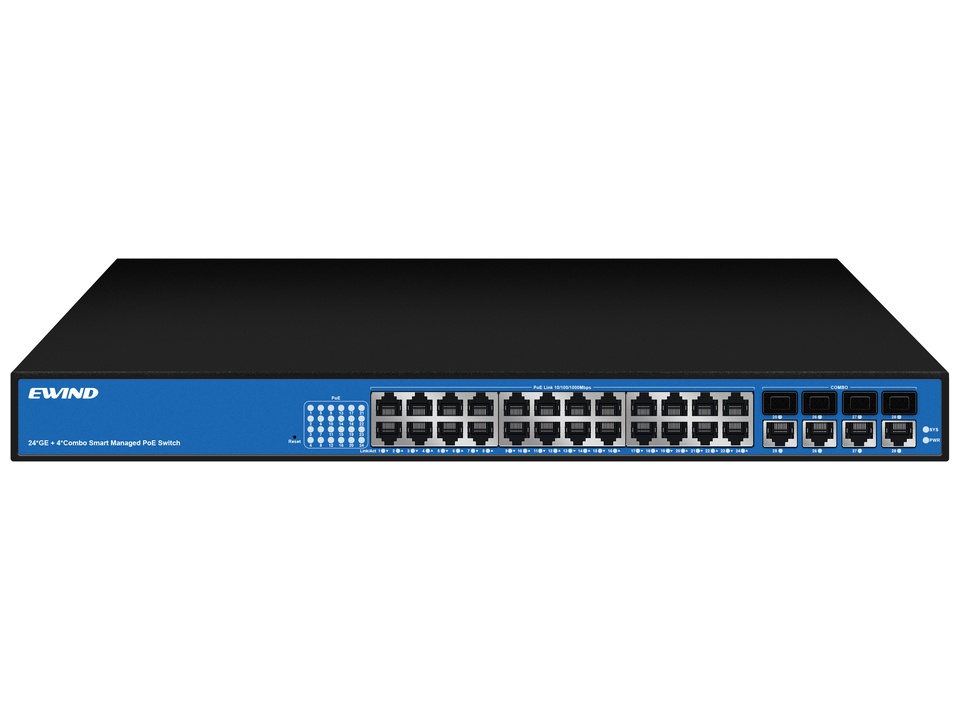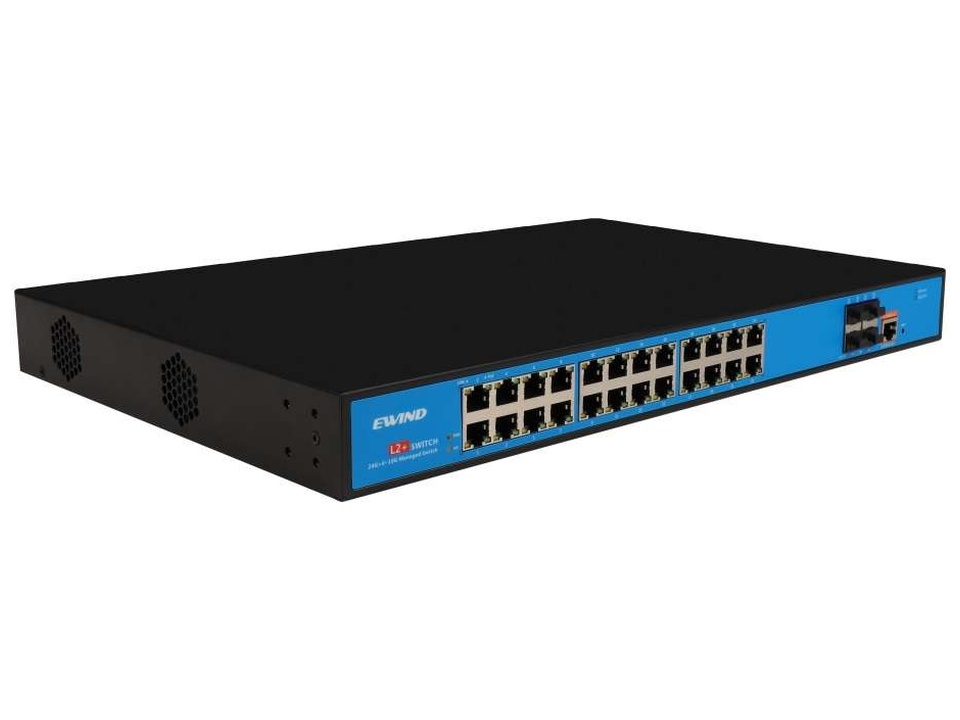

In a small network, an unmanaged switch often works until more cameras, VoIP, access points, servers, and multiple VLANs appear. At that point the problem is no longer just port count but lack of control over traffic, priorities, and inter-segment routing. That is why infrastructure growth usually happens in stages: Smart L2 first, then L3 at the core when the network actually needs it.
What a Smart L2 switch really adds
A Smart L2 switch makes sense when the design requires VLANs, QoS, basic protection mechanisms, and per-port management, while routing between subnets can still be handled by the router or firewall. This is typical in offices, retail sites, schools, or mid-size CCTV networks where surveillance, office traffic, guest Wi-Fi, and voice need to be separated. At this stage, the goal is not only segmentation but also proper prioritization of latency-sensitive services such as voice and video.
When L3 stops being optional and becomes necessary
As the number of segments, distribution cabinets, and fiber links grows, forcing all routing through the edge device becomes inefficient. A core L3 switch handles inter-VLAN routing in hardware, shortens traffic paths, and offloads the router that should focus on Internet access and security policy. This matters especially in multi-floor buildings, campuses, hotels, and industrial sites where many subnets exchange data locally and should not be hairpinned through the edge router every time.
What to evaluate beyond the switching layer itself
Even a well-chosen Smart L2 or L3 platform will not solve the problem if the design lacks fiber uplinks, sufficient backplane capacity, STP mechanisms, ACL support, and manageable administration. That is why the choice of a distribution or core switch has to follow the topology of the entire site rather than the port count alone. A well-designed network grows predictably: Smart L2 organizes the access layer, and L3 takes over the core only when inter-segment traffic genuinely requires it.